I’ve shipped 30 production systems across AI, voice, search, and media infrastructure. If you’re building in any of these — I’ve already solved problems like yours.
Identify the friction. Remove it. Build something the next person can maintain without you. That method has guided every system I have shipped — from a recruiter's desk in Hyderabad to an AI lab in Coimbatore. The technology changed at every stage. The discipline did not.
Production AI: voice agents, semantic retrieval, and multi-modal search workflows.
Engineering leadership: end-to-end delivery, architecture, and operational automation at scale.
Infrastructure mindset: reliability, cost constraints, and clear boundaries that survive handoff.
0
Production Systems Shipped
0
Years Building
0
Industries Touched
0
Technology Domains Deep
PROFILE SNAPSHOT
From Recruiter’s Desk to AI Architecture
15 Years of Shipping What Needed to Exist
TECHNICAL STRENGTHS
Voice AI SystemsSemantic Retrieval PlatformsMedia Infrastructure ArchitectureFull-Stack + Cloud DeliveryCost-Aware AI Operations
PRODUCT & DELIVERY STRENGTHS
Workflow DigitisationProblem Framing & PrioritisationCross-Functional Delivery OwnershipTeam & Process LeadershipOperational Automation at Scale
SCROLL TO EXPLORE BY TECHNOLOGY
8 PRODUCTION SYSTEMS
AI & Machine Learning
From semantic search to voice agents. Production AI, not demos.
AI Agent orchestrationHume AIOpenAI APISpeech analysisWorkflow notificationsPythonLiveKit AgentsFaster-WhisperOllamaCoqui TTS+29 more
LiveKit is an open-source, WebRTC-based framework for building production-grade voice and video AI agents. It has become the infrastructure layer of choice for the AI industry — enabling developers to deploy real-time conversational agents where a human speaks, the system listens, reasons, and responds, all within sub-500 millisecond latency windows.
A LiveKit voice agent is, technically, a participant in a real-time media room. It processes audio through a three-stage pipeline: Speech-to-Text (STT) converts the user's voice into words; a Large Language Model (LLM) interprets meaning and generates a response; Text-to-Speech (TTS) renders that response as spoken audio. The entire exchange happens in the time it takes a human to pause and think.
LiveKit is an open-source, WebRTC-based framework for building production-grade voice and video AI agents. It has become the infrastructure layer of choice for the AI industry — enabling developers to deploy real-time conversational agents where a human speaks, the system listens, reasons, and responds, all within sub-500 millisecond latency windows.
A LiveKit voice agent is, technically, a participant in a real-time media room. It processes audio through a three-stage pipeline: Speech-to-Text (STT) converts the user's voice into words; a Large Language Model (LLM) interprets meaning and generates a response; Text-to-Speech (TTS) renders that response as spoken audio. The entire exchange happens in the time it takes a human to pause and think.
The challenge — and the cost — has always lived in that pipeline.
THE PROBLEM
By default, every stage of the LiveKit pipeline routes through commercial vendor subscriptions. Deepgram or AssemblyAI for speech recognition. OpenAI, Anthropic, or Groq for language reasoning. ElevenLabs, Cartesia, or PlayHT for synthesis. Each subscription charges per token, per audio second, per API call. At scale, these costs are not a rounding error — they are the dominant operational expense of any voice AI deployment.
There is a second problem less commonly discussed: language. The major commercial STT and TTS providers are trained primarily on English, American English, and the major European languages. For India, with its twenty-two constitutionally recognised languages and hundreds of regional dialects, the existing vendor ecosystem offers partial coverage at best. For Africa, with its estimated two thousand distinct languages, it offers almost none. Any voice agent built on the default commercial stack is, structurally, inaccessible to the majority of the world's spoken language landscape.
THE SOLUTION
The plugin replaces all three commercial vendor dependencies — STT, LLM, and TTS — with locally-running open-source models deployed on a single cloud VM instance. The architecture is self-contained: the voice pipeline never leaves the infrastructure. There are no per-call charges for speech recognition. No per-token charges for language reasoning. No per-character charges for voice synthesis. The cost model shifts from usage-based billing to the fixed, predictable cost of a cloud instance.
The STT layer uses models capable of recognising low-resource languages not supported by commercial providers. The TTS layer supports synthesis in regional scripts and phoneme systems that mainstream providers do not. The LLM layer runs quantized open-source models suitable for conversational reasoning tasks at the performance tier required for real-time voice.
The result is a voice agent that speaks languages. Not the languages of the market. The languages of the people.
HOW IT IS USED TODAY
This website's voice agent — the one that greets you at the entry and responds to your spoken questions — runs entirely on this infrastructure. There are no third-party API calls during those conversations. The audio travels between your device and a privately-managed VM instance. The speech is recognised, reasoned over, and returned as sound, locally, without touching a commercial vendor's servers.
It is not a demo. It has been in production use.
WHAT COMES NEXT
The plugin will be released publicly as an open-source package for the LiveKit Agents ecosystem. The intent is to lower the infrastructure cost of voice AI to near zero for developers in India, Africa, and any other region where the existing commercial vendor landscape does not serve the local language, the local economy, or the local use case.
If you are building a voice application for a language that no one in San Francisco has thought to support — this plugin is for you.
Some things cannot be built. They can only be written.
Seven songs, released under Sounds of Isha, offered from lived experience. Each one is an attempt to capture what words alone often miss.
SOUNDS OF ISHA
Writing lyrics has been like playing drums on the skin of words with the sticks of emotion.
This section is designed as seven sonic chapters. Every chapter holds context first, then the song, so each video feels like part of one cohesive body of work.
SONG 01
Yoga Se Hi Hoga
"A song that captures the search for joy outside and finding it within through Yoga."
A movement from restlessness to centeredness, written like a reminder that inner balance is not an idea but a lived discipline.
SONIC CHAPTER
YouTube
SONG 02
Hey Shivaya Shankaraya
"A soulful chant offered at Mahashivratri 2023."
A devotional invocation carried by rhythm and surrender, composed to hold stillness and intensity in the same breath.
SONIC CHAPTER
YouTube
SONG 03
Gaon Maati Chhod Aaye
"A migrant worker anthem, portraying the challenges and longing for home."
An ode to those who leave their soil to survive, and still carry the scent of home inside every unfinished sentence.
SONIC CHAPTER
YouTube
SONG 04
Ye Hai Mahashivratri
"A high-energy celebration of the great night of Shiva."
A night-song of fire and celebration, made to echo collective devotion with urgency, drums, and joy.
SONIC CHAPTER
YouTube
SONG 05
Samarpan ko tere Pranam
"A song of devotion and surrender."
A prayer in melodic form, shaped around humility, gratitude, and the tenderness of offering oneself fully.
SONIC CHAPTER
YouTube
SONG 06
Har Har Mahadev
"A thunderous tribute to Shiva, the Adiyogi, extolling His limitless compassion."
A powerful chant of reverence and force, written to feel like a procession where each line rises like a call.
SONIC CHAPTER
YouTube
SONG 07
The Source of Creation
"A spoken word poetry piece by Sadhguru exploring the divine within."
A reflective spoken meditation on origin, awareness, and the intelligence that silently holds all creation together.
SONIC CHAPTER
YouTube
AI LABS: THE LYRICIST'S EXPERIMENT
Writing the words. Teaching the machine to sing them.
These are AI-assisted songs where the lyrics remain deeply personal while the arrangement, voice textures, and tonal experiments are built with generative tools. This is not replacement. This is a new instrument.
AI TRACK 01
Journey with Sadhguru
"A contemplative journey where devotional lyrics meet AI-crafted sound design."
Written from an inner quest, this track explores surrender, inquiry, and movement through layered electronic textures.
AI TRACK 02
Jogiya Teri Kripa Se
"A gratitude hymn reinterpreted through modern production and AI voice experimentation."
This composition carries the spirit of devotion while testing how machine-generated tonal spaces can hold emotional depth.
AI TRACK 03
Pratyaksha Bhairavi
"A fierce, immersive chantscape inspired by Bhairavi energy and ritual rhythm."
Structured like a sonic invocation, this song blends lyrical intensity with synthetic atmospheres and percussive drive.
AI TRACK 04
Dheemi Dheemi
"A soft-burning melody on longing, slowness, and emotional afterglow."
This piece experiments with minimal AI orchestration to keep the lyric intimate while the arrangement breathes in quiet layers.
FIELD WORK
Teaching where students are, not where systems expect them to be.
EDUCATION
Teaching, for me, means helping students finish the full journey.
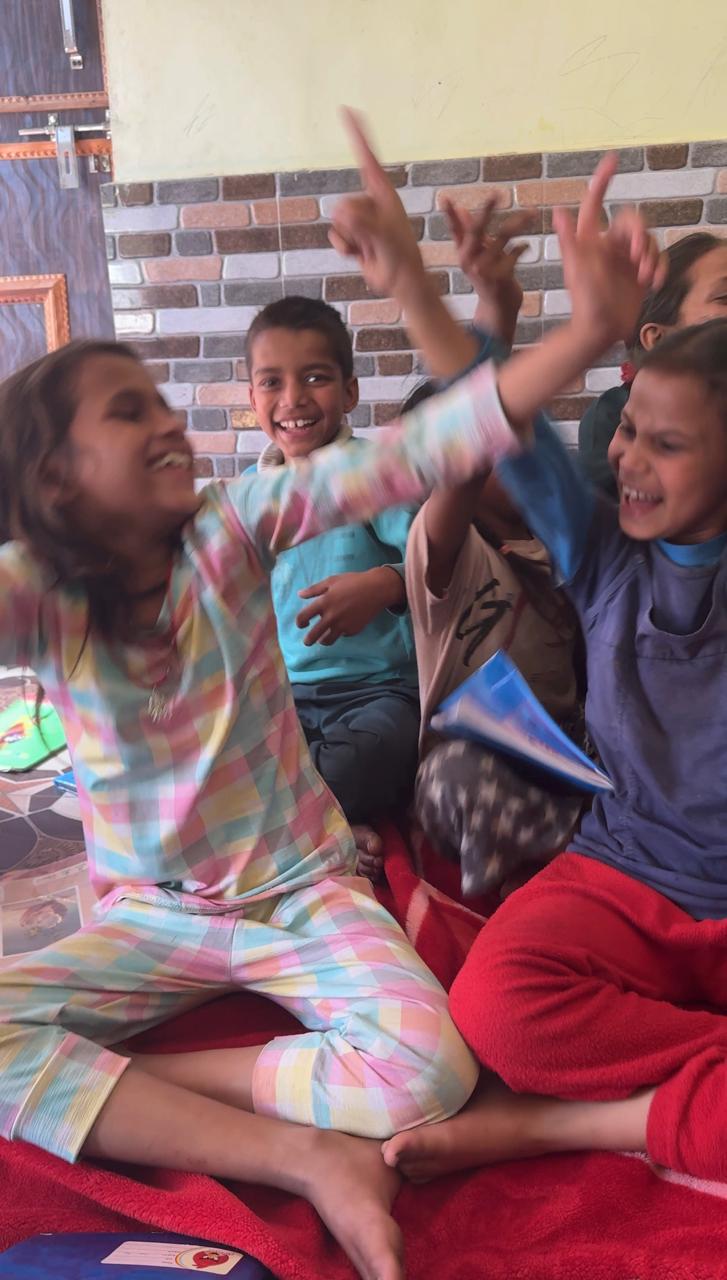
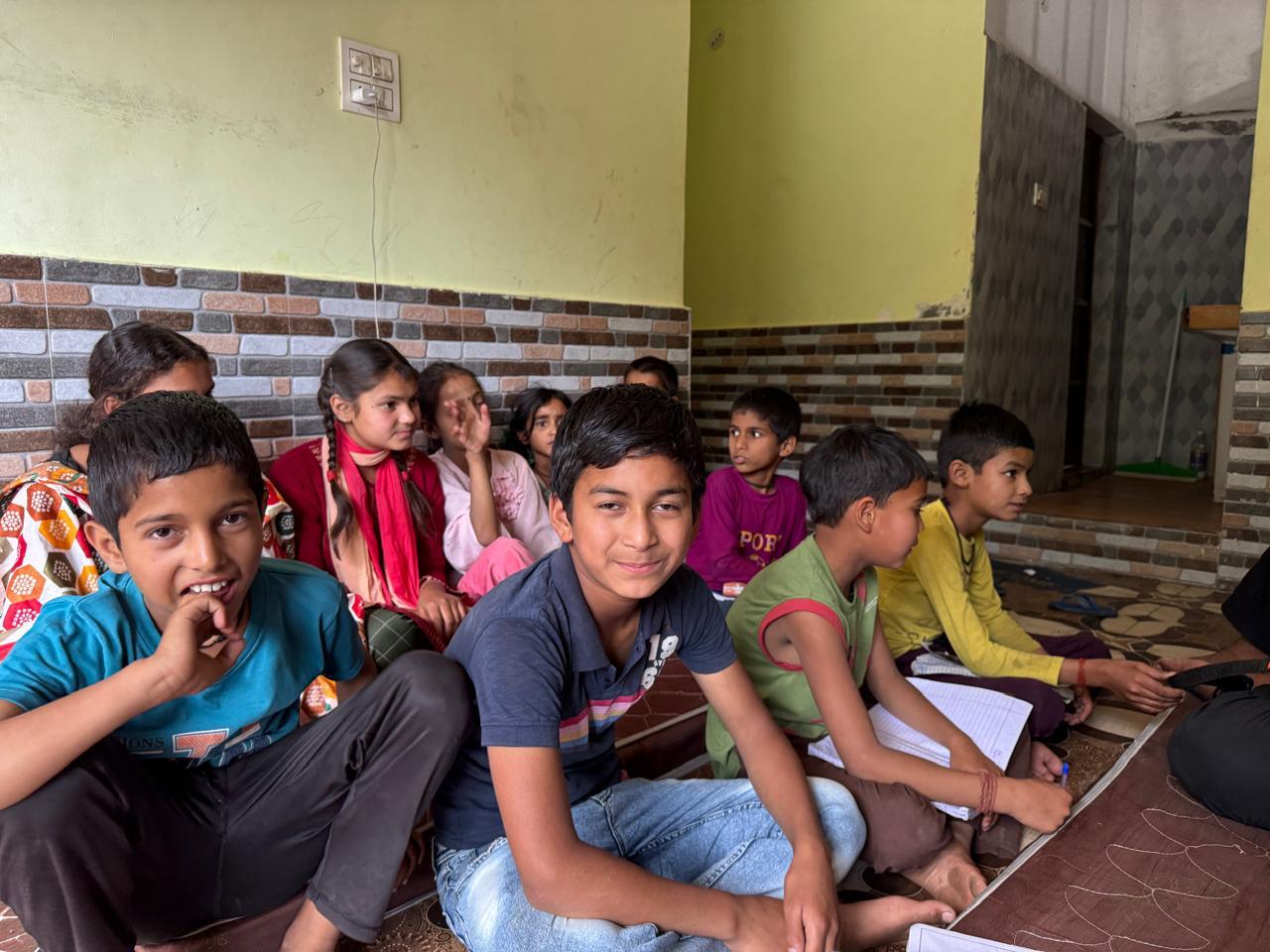
I have taught students to build, communicate, and complete real work. From Isha Vidya classrooms to village classes in Uttarakhand, the focus is the same: make learning practical, make it accessible, and make it complete.
ISHA VIDYA
Entrepreneurship Through Website Building
I did a project with the Isha Vidya students where I was teaching them entrepreneurship through making websites.
I also gave them training on how they can approach different customers and offer them a website, and I taught them how to deploy a website so they can complete the full customer process.
Apart from that, I have taught village kids in Uttarakhand, in Rudraprayag district.
In the village gates, I would gather them and conduct special classes so they would be able to learn English.
TEACHING METHOD
Teaching Coding Through Poetry
I am deeply passionate about teaching software. One technique I have used is poetry — translating programming concepts into rhythm and imagery so students can remember ideas with ease.
POEM PREVIEW
Devi, help me do my best.
As finding a nameless variable is my quest.
As I look beyond the value of a variable,
the name is there,
pointing to a memory block
that the system can spare.
READ FULL POEM
Devi, help me do my best.
As finding a nameless variable is my quest.
As I look beyond the value of a variable,
the name is there,
pointing to a memory block
that the system can spare.
As I wander around the declarations,
sieving through the fat data-filled and starving valueless variables,
all of them have a type,
all of them have a name.
As I peek in the three conditions of for,
looping on in the code block,
the variable initiates, changes, and finalizes;
a name still represents the changing stock.
In the options given by if and else if,
and in the inevitability of else,
I find a true and false,
but it's just a Boolean clause.
While this happens, do this;
while that happens, do that.
I play the block continuously,
but I can't find the sound of a nameless variable
in this syntactic cacophony.
I stumbled on a for each,
for each variable and then came a name.
Some said "as a name," some told the name in;
still, the name was there.
My pessimism says I've lost this game.
To get the desired action,
I planned to make my own function.
I wrote the function keyword and a name;
the parameters in the bracket were also names.
The parameter names showed up
inside the function too.
Only if they were born nameless and grew nameless,
it would have been cool.
The function then returned a value;
I thought, this is it.
But then I was visited by VBScript and JavaScript:
the returned value has a name;
the function name was the same.
They said everything is either an object
or is found inside an object.
Then who am I to object?
So I created an instance of an object,
or may I say the object was set.
And then I put a dot
and tried to add a nameless variable into my plot.
Alas, fate was cruel:
objects only allow names after the period,
any one among the dual -
name of a function or variable.
Then I found an array,
collection of items that don't stray.
These are my nameless variables, I declare.
But each of them had a key or number for them,
which the array had uniquely spared;
that was their name.
Made me feel like I'm lame,
what a structural shame.
But I wasn't done with arrays.
I decided to look into each key, each number;
maybe they were my nameless ones.
But the sky broke and foretold:
you will fail, as they are fields
and not variables, as thought by some.
In my helplessness I called my friend, the for.
And she declared a variable so humble,
so humble that it started at zero
and stepped one number in each loop.
It kept going, stopping at a number less than
the array contained items.
I put brackets and wrote the number beside the array name;
they popped out values,
but still no nameless variable to blame.
In my quest I faced many errors,
trepidation followed by shivers.
To locate my foe, I planned ad hoc:
a try and catch block.
I wrote a print message in catch block
to catch errors in exception object and mock.
It did its job,
showed errors round the clock.
No such thing as a nameless variable.
No, it exists not.
WHAT'S NEXT
A WhatsApp Learning App with AI
I am presently working on creating an application that students can use through WhatsApp to further their learning and clear their doubts.
They will ask a question in voice or text, and it will send back a video that contains the answer, like a video presentation.
This is one of the things I wish to do for education: helping students learn easily by leveraging AI, especially for students who are not good in English, so they can further their learning and learn to speak better English.
PRODUCT FLOW
Student asks a doubt on WhatsApp in voice or text -> AI understands context -> student receives a video answer that explains the concept clearly.
"I am building this so students can ask in their own language, learn with confidence, and grow without language being a barrier."
FIELD WORK
Teaching where students are, not where systems expect them to be.
YOGA
Eight years of practice. One discovery: bliss is in the present.
For eight years at Isha Ashram in Coimbatore, I followed a daily schedule of yoga and sadhana alongside contributing my skills to the foundation's work. That rhythm taught me something no sprint or deadline ever could: that meditation, like salt in a dish, doesn't need to take up space to be essential. It is present, invisible, and indispensable.
FOCUS
Under pressure, fully present.
Yoga gave me the ability to walk into high-stakes situations without losing a single percent of my attention. Not calm in spite of the chaos — calm as a deliberate choice within it.
PERSPECTIVE
The gift of opposite views.
Eight years of practice opened something unexpected: the ability to genuinely understand people whose worldview is completely opposite to mine. Not just tolerate — understand. That made collaboration possible where conflict used to live.
PRESENCE
Bliss is in the present.
This is what I learned. Not a pose, not a technique — a shift in where I place my awareness. When that became real, it changed how I lead, how I listen, and how I work.
PLACE
Isha Yoga Center
Home for eight years. Yoga, sadhana, and the daily work of contributing technological skills to one of the world's largest foundations.
A sea of seekers, each on a different path, sharing the same river. Proof that people can grow together even when they start from completely opposite places.
Rivers of people and collective seeking
PLACE
Kedarnath
The Himalayas don't just inspire — they recalibrate. The vibe of a place is as important as its decor. I travel to these spaces not to escape, but to deepen.
Mountain air and long silence
PLACE
Kalimath
A quieter Himalayan village, less visited, more felt. Some of my clearest perspectives have arrived in these overlooked meditative spaces.
A village that teaches you to listen
PLACE
Isha Yoga Center
Home for eight years. Yoga, sadhana, and the daily work of contributing technological skills to one of the world's largest foundations.
A sea of seekers, each on a different path, sharing the same river. Proof that people can grow together even when they start from completely opposite places.
Rivers of people and collective seeking
PLACE
Kedarnath
The Himalayas don't just inspire — they recalibrate. The vibe of a place is as important as its decor. I travel to these spaces not to escape, but to deepen.
Mountain air and long silence
PLACE
Kalimath
A quieter Himalayan village, less visited, more felt. Some of my clearest perspectives have arrived in these overlooked meditative spaces.
A village that teaches you to listen
READING
Vigyan Bhairav Tantra
My favorite book. Osho's commentary on this ancient tantric text is the most practical guide I have found for understanding different forms and methods of meditation — and how they can be incorporated quietly into daily life. The two volumes together are a complete map.
Some problems do not ask to be solved. They simply present themselves — and you cannot look away.
Not every system I have built began as a job. Some began as frustration. Some as curiosity. Some as the quiet recognition that something useful ought to exist in the world, and no one had yet made it. This section holds those — the experiments outside the commission, the products built in the margins of time, the architectural decisions made not because someone asked for them but because the problem was real and the solution was within reach.
PRODUCTS IN PROGRESS
These are not side projects. They are products built from the conviction that the problem is real, the technology is ready, and the gap exists because no one has sat down long enough to close it. Each one was designed in the margins of time — evenings, weekends, the hours between one assignment and the next. Each one addresses a specific failure of the existing landscape. They are at different stages of completion. They will be deployed when the conditions are right.
ACTIVE · BETA LIVE
Stonks Radio — Audio-First Market Intelligence
WHAT IT DOES
Stonks Radio turns stock tracking into a live audio experience. A user picks any NSE stock, presses play, and receives AI-generated commentary in simple language with updates every three minutes during market hours. The product is built for real use: no app download, browser-first playback, and support for English, Hindi, and Assamese.
The stream focuses on clarity, not noise — price movement, volume shifts, sector pulse, and key market context explained in plain speech. It is designed to fit into a commute, a workday, or a short break, so users can stay informed without being locked to charts all day.
THE GAP IT CLOSES
Retail traders are forced into high screen-time workflows: constant app checking, fragmented YouTube/news inputs, and jargon-heavy analysis that increases anxiety instead of improving decisions. Existing tools optimize for visual engagement. Stonks Radio closes the gap with low-friction, audio-first intelligence built for attention, accessibility, and disciplined decision support — without buy/sell calls.
Live in beta with browser-based access and WhatsApp sign-in.
Next.jsLive audio streamingAI commentary pipelineNSE market data ingestionMultilingual voice delivery
These are not experiments for a portfolio. They are ideas that needed to exist. The free time was found. The infrastructure was built. The products are here.
If you are an investor, co-founder, or early adopter who sees what these products are trying to do — the conversation is open.